Running on Memory: What Winging It Really Costs a Small Business



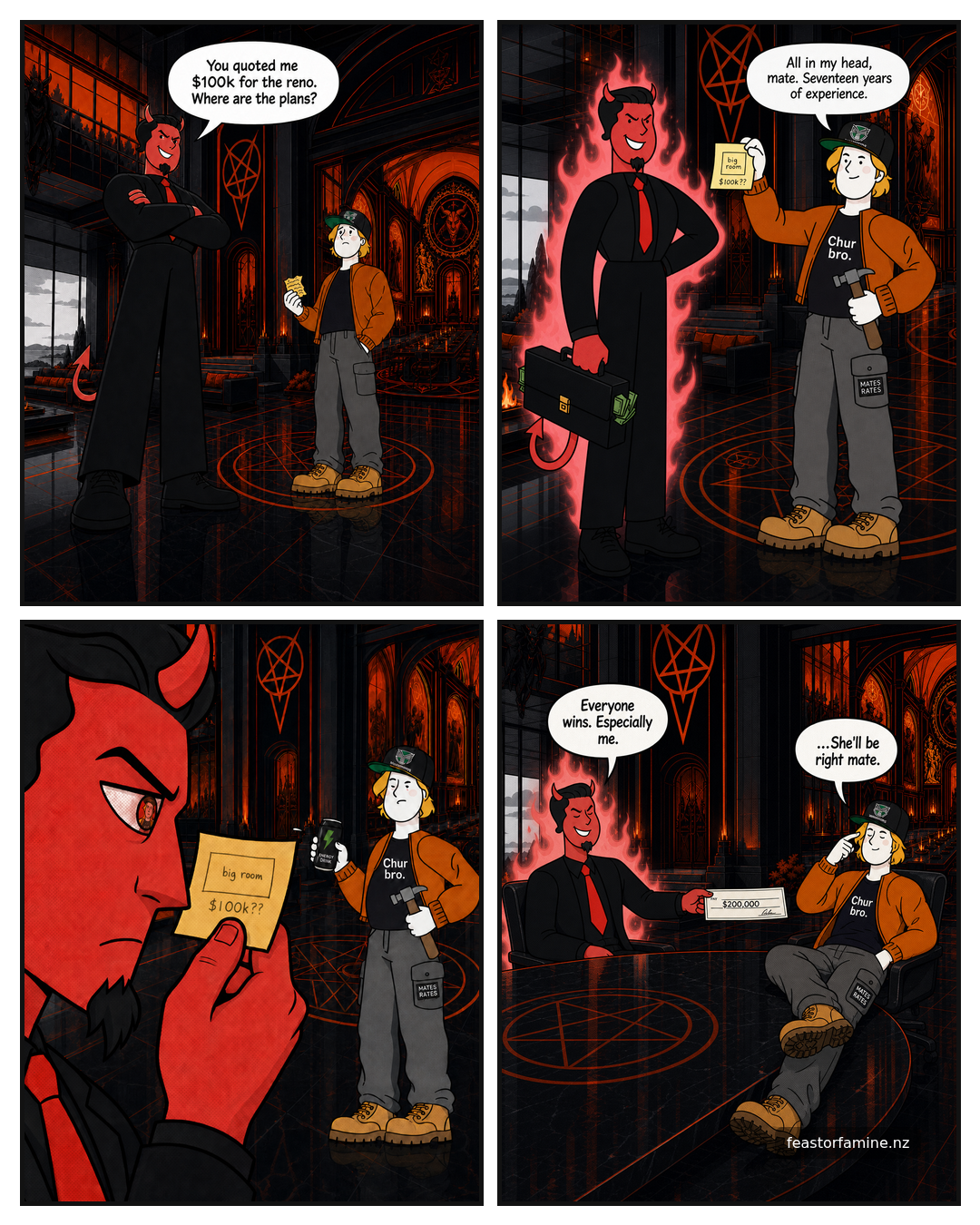
Running on Memory: What It Really Costs NZ Trade Businesses
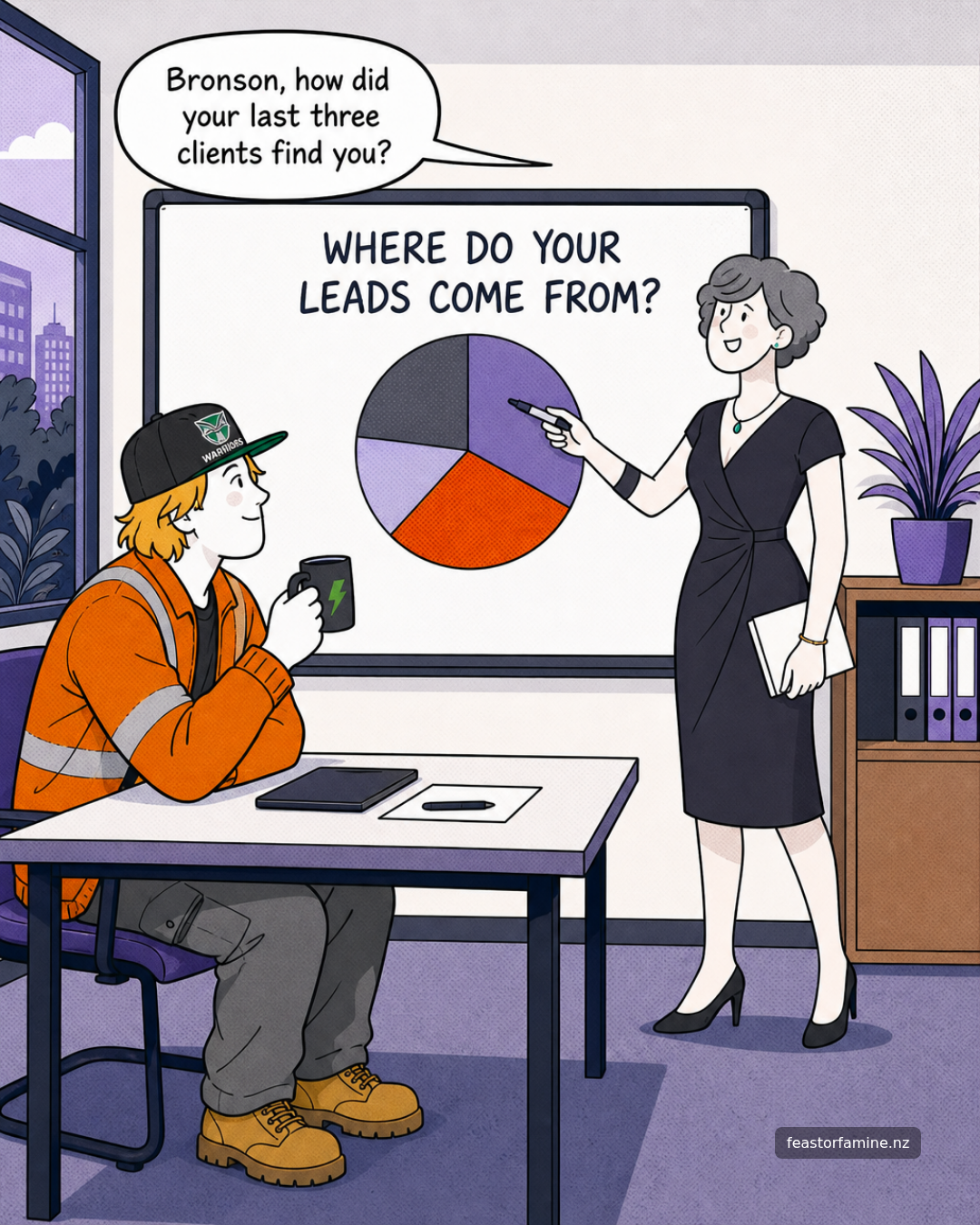
What does one dropped lead cost across 52 weeks? It's a question most NZ trade business owners have never sat down to answer, probably because they're too busy running a business entirely from inside their own heads to do the maths.
And that's precisely the problem.
The Mental To-Do List That Works Great Right Up Until It Doesn't
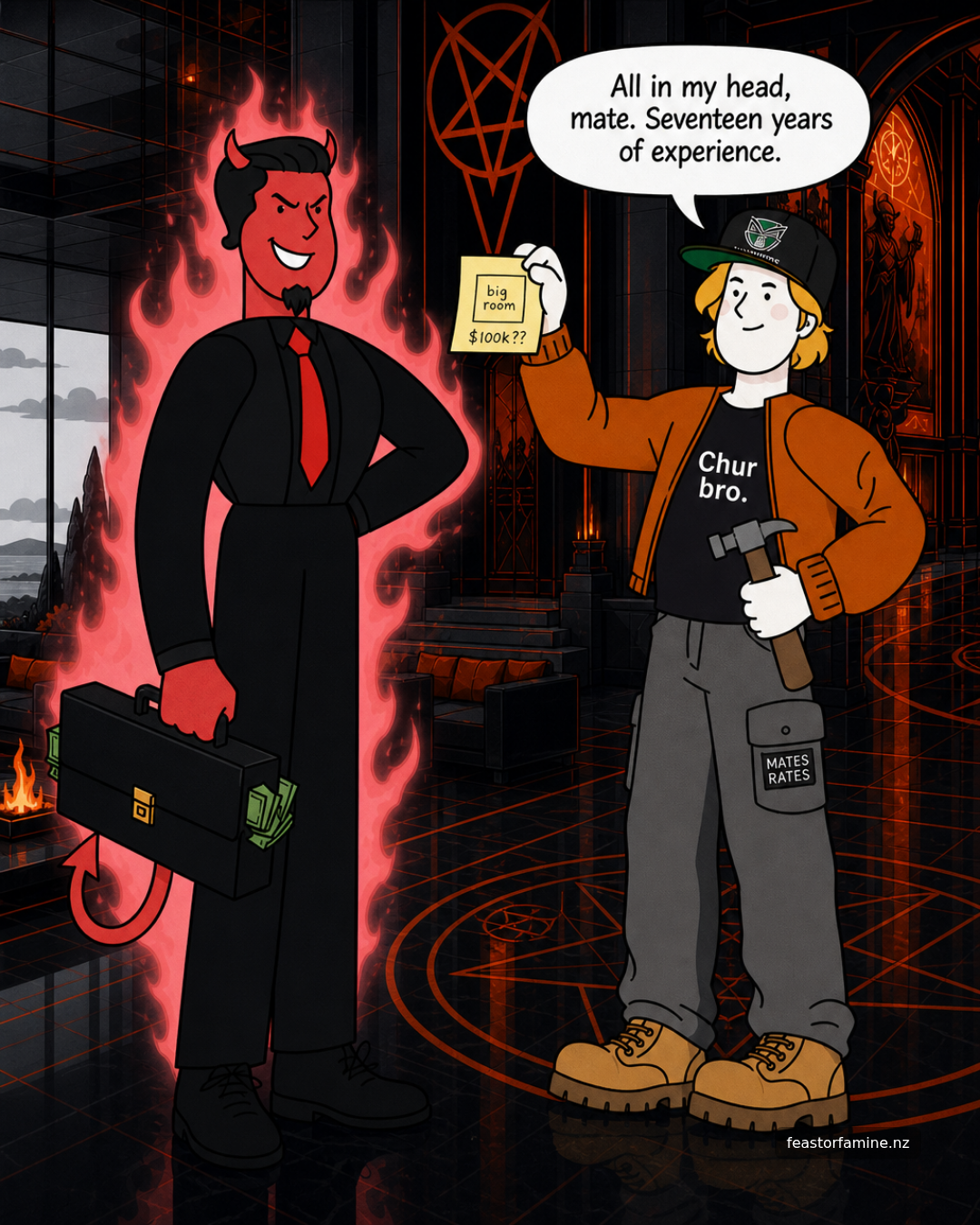
There's a very specific kind of confidence that comes with knowing your business cold. You know which jobs are on, which quotes are out, which client rang twice last week. You carry the whole picture around with you. It fits, mostly. You built this business. Of course it's in your head.
The trouble is, a brain running a 10-person trade operation isn't a system. It's a single point of failure with a heartbeat.
Small businesses often feel operational problems first because they rely heavily on the owner to keep everything in their head. When you're the only one who knows where everything is, the business doesn't scale outward — it scales against you. Every new crew member, every new job stream, every new quoting conversation adds more load to a mental model that was already running hot.
Think of it this way: a tradesperson's memory isn't bad. It's excellent for what it was designed to do. Research on working memory capacity, including the foundational work by psychologist George Miller, suggests people can hold roughly seven items in mind at once — give or take two. A growing trade business, however, might have 40 open quotes, 12 active jobs, 6 callbacks due this week, and a handful of leads sitting in someone's voicemail from three days ago. That's not a memory problem. That's an architecture problem.
Let's Actually Do the Maths on Missed Callbacks
Here's where the abstract becomes uncomfortable. For NZ trades businesses, missed calls are a significant and often underappreciated source of lost revenue — a homeowner in a burst pipe emergency, a property manager needing an urgent electrical fix, a builder looking for a reliable subcontractor represent high-value, often urgent calls.
Industry estimates suggest many trade businesses miss a significant proportion of incoming leads because calls come through after-hours or while the owner is on site. Some surveys put this as high as 30–50%, reflecting the structural reality of a trade operation where the person best placed to answer the phone is elbow-deep in a wall cavity. Robust, independently verified data specific to NZ trades is limited, so treat the higher end of that range as indicative rather than precise.
Now apply that to the numbers. For a plumbing business booking residential call-out and repair jobs at an average of $400–$800 — noting that larger project work will be worth considerably more — recovering even two or three missed leads per week has an immediate and significant impact on monthly revenue. Annualise that and you're not talking about a rounding error. You're talking about a real, compounding hole.
Some vendor-commissioned research in the call-answering and CRM space has claimed that the average small business loses over $125,000 per year to missed calls, with individual missed calls in trades-adjacent service businesses worth hundreds to over a thousand dollars each. These figures are widely circulated but originate largely from companies with a commercial interest in the finding, so they should be treated as directional rather than definitive. The underlying logic — that missed calls represent real, recurring revenue loss — holds even if the precise numbers are contested.
For context: a customer who books once and has a good experience is worth multiples of that first job. The lifetime value of a residential client — across maintenance calls, renovations, referrals to their neighbours — makes a single missed callback a much bigger loss than whatever the job itself was worth.
None of this shows up on your P&L as "leads we ignored." The cost of lead loss is rarely visible in real time. You don't get a line item that says "leads we ignored" — you just have slower months than you could have, a competitor who seems to be everywhere, and a nagging sense that your marketing should be doing more than it is.
The marketing is probably fine. The gap is what happens after the lead arrives.
The Quote That Never Got Followed Up
Most NZ tradies hate following up on quotes. It feels like pestering, takes time, and is easy to forget when you're busy. The result is that a large proportion of sent quotes receive no follow-up at all — and a significant percentage of those unconverted quotes would have become jobs with a simple, timely nudge.
This is deferred revenue sitting in someone's inbox. You spent real time measuring, pricing, and writing a quote. You sent it. Then life happened — a job overran, a supplier rang, a crew member called in sick — and that quote just... sat there. The customer assumed you weren't interested. They called the next number.
A website enquiry answered within ten minutes feels like great service. Answered tomorrow, they've often already booked someone else. The same logic applies to quotes. The longer a quote sits unacknowledged after sending, the colder it gets. Speed of follow-up isn't a nice-to-have. It's the ballgame.
A widely cited study by MIT and InsideSales.com — conducted around 2007 and focused on web-generated B2B leads — found that following up within five minutes made it dramatically more likely to reach and qualify a lead compared to waiting even 30 minutes. The specific figures from that research are frequently quoted across sales and marketing content, though the study is now nearly two decades old and was conducted in a different context to modern NZ residential trades. The directional finding, however, is consistent with how lead behaviour works: when someone contacts multiple businesses, the one that responds first tends to win. The others rarely get a second chance.
The Busyness-Versus-Systems Illusion
Here's a thing that happens in trade businesses, and it's almost universal: the owner is exhausted, the phones are ringing, the jobs are moving, the crews are deployed. From the outside — and from the inside — it looks like a well-run operation.
But busyness is not a system. It's the absence of one, dressed up in hi-vis.
Sales and CRM research has consistently found that a majority of businesses lack systematic processes for tracking, nurturing, and following up with leads — relying instead on memory, scattered notes, and good intentions. The result is predictable: leads fall through the cracks, follow-ups are forgotten, and revenue is lost. While specific figures vary across studies, the pattern is well documented across small business research, and trade businesses are not immune to it.
That's not a problem confined to lazy businesses. It shows up in busy ones — including the ones where the owner is first on site and last to leave.
Work allocation and job handoff become harder once more people touch the job. The whiteboard and group chat approach stops scaling. You hired a second estimator and suddenly two quotes went out for the same client. You onboarded a new admin person and three callbacks got double-assigned. You took on a second crew and no one's quite sure who's following up the Tauranga job.
The system that worked at three people doesn't work at eight. The system that works at eight will crack at fifteen. Memory isn't a growth strategy. It's a ceiling.
The Cold Lead: Slow Decay, Full Price
There's a particularly quiet category of lost revenue that doesn't get much air time: the lead that went cold not because you dropped it, but because you got to it too late.
When calls are missed, the speed of follow-up determines whether the customer is recoverable. In a market where multiple businesses receive the same lead via Google, directories, or referrals, the business that calls back first is in the strongest position to win the work — regardless of price, quality, or reputation. That dynamic is consistent across most service-business research, even if the precise conversion advantage varies by context.
This is cold comfort for the owner who rings back six hours later with every intention of winning the work. They're not losing because their pricing is wrong, or because their reviews are thin. They're losing because someone else picked up the phone.
When voicemails are left, the average small business can take well over a day to return the call — by which point, the caller has often already found an alternative. Claims about exact timeframes circulate widely in call-answering service marketing, but the underlying point is sound: in urgent trade scenarios, a delayed callback is frequently a lost job.
Research and anecdotal evidence from review platforms suggest that poor phone responsiveness is a meaningful contributor to negative online reviews — with callers who couldn't reach a business sometimes expressing that frustration publicly. Specific percentages cited in some marketing content lack traceable primary sources, but the reputational risk of missed calls is well established in small business literature.
So the missed callback doesn't just lose you that job. It potentially loses you the next person who searched your business name and read the review.
The Deferred Price Tag
Here's the most insidious thing about running on memory: the cost doesn't arrive immediately. It accumulates quietly, invisibly, across months and years — and then arrives all at once.
You don't notice the quote you forgot to follow up. You don't see the callback that converted your competitor. You don't clock the cold lead who went with someone else and then told their neighbour. None of that appears in any report, because there's no system generating reports.
Vendor-commissioned research frequently estimates annual revenue loss from missed follow-ups in the six-figure range for typical small businesses. As noted earlier, these figures come with significant caveats about their origin and methodology. What is clearer is the direction of the effect: businesses that systematically follow up recover revenue that otherwise disappears silently, with no record that it was ever there to be won.
That's not a catastrophic event. It's a slow bleed. And slow bleeds are dangerous precisely because they don't feel urgent. The business still runs. Jobs still get done. Revenue still comes in. But there's a version of the business that could exist — the one where the callbacks got made, the quotes got followed up, the warm leads got converted — and that version earns meaningfully more. Not because it works harder. Because it doesn't forget things.
The cost of doing nothing about this isn't zero. It's deferred. It arrives when a competitor who got their systems right starts taking your regular clients. It arrives when a key team member leaves and takes the only mental map of the client list with them. It arrives when you're trying to grow and realise the ceiling isn't market demand. It's the fact that you're still running the whole operation from inside your own head.
Busy Is Not the Same as Working
The hard truth for most NZ trade business owners isn't that they're lazy or inattentive. It's the opposite. They work extraordinarily hard, and they've built real businesses. The problem is that hustle and systems are two different things, and for a long time they feel interchangeable.
The better you are at your core service, the less available you are to capture new business. The phone system that worked when you were starting out becomes the bottleneck that prevents you from scaling.
That's the trap. Your competence at the actual trade keeps you on the tools. Being on the tools means missed calls. Missed calls mean lost leads. Lost leads mean a business that plateaus, not because the market dried up, but because the system never kept pace with the work.
Missed calls are not isolated operational inconveniences. They represent a recurring, measurable revenue control variable in phone-driven small businesses.
And so the question isn't whether you're working hard enough. You almost certainly are. The question is what's happening to everything that falls outside the radius of your memory, your phone, and the hours you're physically available.
Something is. And it has a price.
Feast Or Famine
One team for everything digital, famous for the characters.
One team for everything digital, famous for the characters.
Learn more about Feast Or Famine and get started today.
Visit Feast Or Famine